
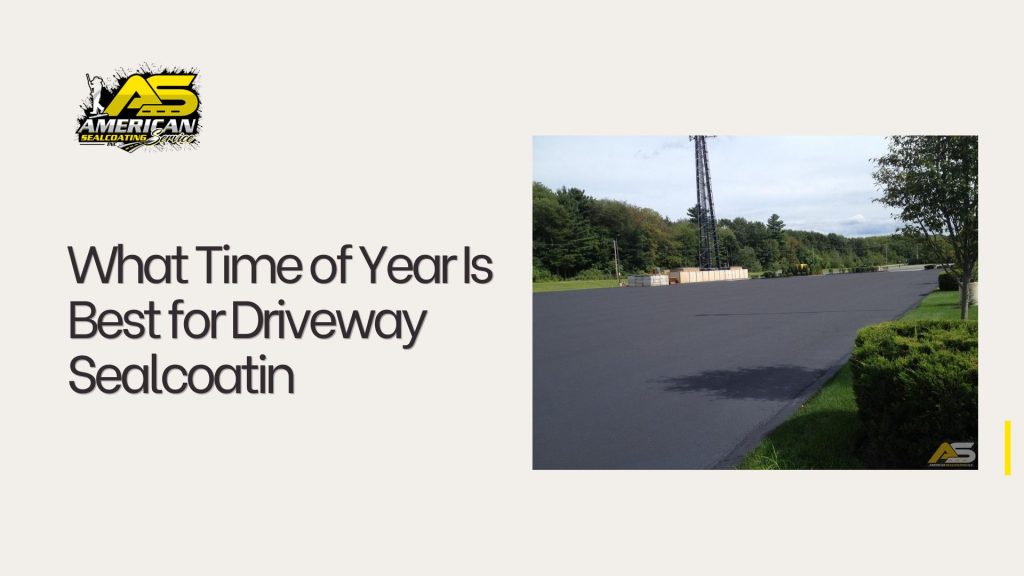
If you want your driveway sealcoating to last, timing matters. In Billerica, MA, the best time to sealcoat a driveway is usually late spring through early fall, when temperatures are warm enough for the sealer to cure properly and the pavement has had time to dry out after winter.
Sealcoating during the wrong season can lead to poor adhesion, tracking, slow curing, or premature failure. For most homeowners in Billerica, the safest window is typically May through September, depending on weather conditions.
Key Takeaways
- Best time to sealcoat in Billerica: Late spring through early fall, usually May to September
- Ideal temperatures: Air and pavement temperatures should stay above 50°F, with daytime conditions ideally between 60°F and 85°F
- Dry weather matters: You want at least 24 to 48 hours without rain for proper curing
- Spring is great for prep: Crack filling, patching, and cleanup should happen before sealcoating
- Avoid late fall and winter: Cold nights, moisture, and freeze-thaw cycles can ruin a fresh application
Why Timing Matters for Driveway Sealcoating
Sealcoating is not just about improving appearance. It adds a protective layer that helps defend asphalt against water, UV exposure, oxidation, oil drips, and seasonal wear. But for that protection to work, the sealer has to cure under the right conditions.
In New England, that can be challenging. Billerica driveways deal with snow, ice, road salt, spring thaw, summer heat, and fall temperature swings. If sealcoating is applied when the weather is too cold or the pavement is still damp, the finish may not bond the way it should.
That is why choosing the right time of year is one of the most important parts of protecting your driveway.
Understanding Billerica’s Sealcoating Season
Billerica winters are hard on asphalt. Freezing temperatures, snow removal, and repeated freeze-thaw cycles can open cracks and weaken the surface. Spring often brings lingering moisture, while late fall can bring cold nights that interfere with curing.
That leaves a narrower window for successful driveway sealcoating than many homeowners realize.
In general, the best sealcoating conditions include:
| Condition | Recommended Range |
| Daytime temperature | 50°F to 85°F |
| Ideal application range | 60°F to 85°F |
| Nighttime temperature | Above 40°F |
| Rain-free period | 24 to 48 hours minimum |
| Pavement condition | Fully dry and clean |
Late Spring Is Often the Best Starting Point
For many Billerica homeowners, late spring is when driveway sealcoating season truly begins.
By this point, the worst winter damage is easier to spot. Cracks, edge breakdown, and small potholes can be repaired, debris can be cleared away, and the driveway has more time to dry out after spring rain and thaw conditions.
Late spring is a smart time to schedule sealcoating because:
- Winter damage has become visible
- Repair work can be completed first
- Temperatures are more consistently warm
- The driveway is better prepared for summer sun and traffic
That said, early spring can still be too wet or too cold. Even if the daytime feels mild, cold nights and leftover moisture in the pavement can interfere with curing.
Summer Is the Peak Window for Sealcoating
In most years, summer is the most reliable time for driveway sealcoating in Billerica, MA.
Warm temperatures and longer dry periods help sealant cure faster and more evenly. Summer also gives homeowners the best chance of finding a stretch of favorable weather without the interruptions of spring mud or fall cold snaps.
Benefits of summer sealcoating include:
- Faster drying and curing
- Better bonding to the asphalt surface
- Lower risk of moisture problems
- Stronger protection heading into fall and winter
Homeowners should still be careful during very hot stretches. On extremely hot days, sealer can set up too quickly, making even application more difficult. Professional crews usually plan around this by adjusting timing, application pace, and traffic protection.
Early Fall Can Still Be a Good Option
If you missed the spring or summer window, early fall can still be a good time to sealcoat your driveway.
This is often the last opportunity to protect asphalt before winter weather returns. A properly timed fall application can help shield the surface from water intrusion, salt exposure, and cold-weather deterioration.
The key word is early.
Once nighttime temperatures begin dropping too low, curing becomes less predictable. If cold weather arrives too soon after application, the sealer may stay soft longer, fail to bond correctly, or wear prematurely.
Early fall can work well when:
- Daytime temperatures are still consistently above 50°F
- Nights stay above 40°F
- Rain is not in the forecast
- The driveway is clean, dry, and already repaired
Why Winter Sealcoating Is Not Recommended
Winter is not a suitable time for driveway sealcoating in Billerica.
Cold pavement, freezing nights, frost, and snow all work against proper curing. Even if a day seems warm enough, the pavement may still be too cold to accept the product properly. Moisture trapped in or on the asphalt can also prevent adhesion.
Sealcoating in winter can lead to:
- Poor bonding
- Uneven drying
- Tracking marks
- Early flaking or peeling
- Reduced protection and shorter service life
For homeowners, that usually means wasted money and the need for earlier rework.
Don’t Ignore Moisture and Humidity
Temperature is only part of the equation. Moisture plays a major role in whether your sealcoating job succeeds.
Even during the right season, a driveway may not be ready if:
- It recently rained
- Morning dew is still sitting on the surface
- Humidity is very high
- Shaded areas remain damp
- Water is trapped in cracks or low spots
A driveway should be fully dry before sealcoating begins. If not, the sealer may not bond evenly and could cure much more slowly than expected.
This is one reason experienced contractors pay close attention to both the forecast and the pavement condition itself, not just the calendar.
Preparation Comes Before Sealcoating
The best time of year for sealcoating also depends on whether the driveway has been properly prepared.
Before sealcoating, the surface should usually be:
- Swept and cleaned
- Free of leaves, dirt, and loose debris
- Treated for oil spots if needed
- Repaired where cracks or damaged sections exist
- Fully dry before application
In Billerica, spring is often the ideal time to inspect winter damage and handle repairs, while late spring through summer is better for the actual sealcoating.
Skipping prep work can shorten the life of the coating, no matter how good the weather is.
Practical Tips for Homeowners in Billerica
If you are trying to plan the right time for driveway sealcoating, keep these tips in mind:
1. Schedule after crack filling or patching
Sealcoating should not cover unresolved damage. Repairs should come first so the surface is stable.
2. Watch the forecast closely
Try to choose a window with at least 24 to 48 hours of dry weather after the work is completed.
3. Be careful with overnight temperatures
A warm afternoon is not enough if nighttime temperatures drop too low.
4. Keep vehicles off the driveway long enough
Most driveways need about 24 hours for light foot traffic and 48 to 72 hours for full cure, depending on conditions.
5. Don’t wait until the last minute in fall
By the time winter is close, the weather window may already be too narrow.
So, What’s the Best Time of Year?
For most properties in Billerica, MA, the best time for driveway sealcoating is late spring through early fall, with summer often offering the most dependable conditions.
If you want the best results, aim for a period with:
- Warm temperatures
- Dry pavement
- No rain in the forecast
- Completed crack repairs and surface prep
- Enough cure time before vehicles return to the driveway
That combination gives your sealcoating the best chance to last and helps protect your driveway from the costly damage that New England weather can cause.
Why Homeowners Choose American Sealcoating Service Inc.
When it comes to protecting asphalt in Billerica and surrounding areas, homeowners want more than a quick spray-and-go job. They want proper prep, clear communication, and results that hold up.
American Sealcoating Service Inc. is a Billerica-based asphalt contractor serving Eastern Massachusetts with residential driveway sealcoating and related asphalt maintenance services. The company highlights professional pavement preparation, crack sealing, careful edging, and a 24- to 48-hour protection period after application. The business also notes it has been operating since 2003 and cites 5,000+ satisfied customers.
Conclusion
The best time to sealcoat your driveway in Billerica is when weather conditions are working for you, not against you. In most cases, that means scheduling between May and September and choosing a warm, dry stretch that allows the sealer to cure correctly.
If your driveway has cracks, fading, or signs of weather damage, working with an experienced local contractor can help you choose the right time and the right preparation steps before the problem gets worse.
For homeowners looking for dependable driveway sealcoating in Billerica, MA, American Sealcoating Service Inc. is a strong local option. As a locally owned company based in Billerica, they offer residential sealcoating, crack sealing, asphalt patching, and professional prep designed to help extend the life of your pavement. If you want your driveway to look better, last longer, and be ready for the next New England season, requesting a quote or inspection from their team is a smart next step.